
Raleigh Drug Trafficking Lawyer
John McWilliam, PLLC offers strategic legal representation for individuals accused of serious drug trafficking offenses in Raleigh and other Wake County communities.
Free Consultation
Please fill out this form for a FREE Consultation and we will get back to you shortly.
"*" indicates required fields
Felony Drug Trafficking Defense In Raleigh, NC
If you are facing drug trafficking charges, the decisions you make early in the process can significantly impact your future. John McWilliam, PLLC provides focused criminal defense for clients accused of drug trafficking offenses in Wake County. With decades of experience handling complex, felony-level drug crime allegations, Attorney McWilliam works to protect his clients’ constitutional rights, challenge the prosecution’s evidence, and pursue every available legal option under North Carolina law.
You Don’t Have to Face This Alone
When you’re facing a drug trafficking charge, it can feel like everything is happening at once: Court dates, uncertainty, pressure, and fear about what comes next. What most people need at this moment isn’t more information about penalties, it’s someone in their corner who knows how to handle the situation and guide them through it.
That’s exactly where having an experienced defense attorney makes a difference.
From the very beginning, your attorney steps in to take on the legal burden so you can focus on your life, your family, and your next steps.
A Strategic Defense Starts Immediately
In serious felony cases, what happens early matters. Decisions made in the first days and weeks can shape the direction of your case.
Your attorney will begin by carefully reviewing every detail, including how the investigation started, whether your rights were violated at any point, the reliability of the evidence being used against you, and any weaknesses or inconsistencies in the State’s case.
Drug trafficking cases are often built on technical details like search procedures, lab testing, and how evidence was handled. If something was done incorrectly, it may open the door to challenging the case against you.
This early, proactive approach can create opportunities that wouldn’t exist later in the process.
Taking Over Communication and Pressure
One of the biggest sources of stress is dealing with prosecutors, law enforcement, and the court system. You are not expected to handle that on your own.
Your attorney can:
- Communicate with the prosecutor on your behalf
- Handle negotiations and case discussions
- Advise you on what to say, and what not to say
- Protect you from making decisions that could hurt your case
This creates space for you to breathe, think clearly, and avoid costly mistakes during a high-pressure time.
Building a Defense That Fits Your Situation
No two cases are the same, and the right defense strategy depends on your specific circumstances, not just the charge itself.
Your attorney will work with you to develop a defense that may include:
- Challenging whether the drugs can legally be tied to you
- Questioning the accuracy of the alleged weight or substance
- Examining whether the search or traffic stop was lawful
- Identifying alternative explanations or mitigating factors
In many cases, the goal is not just fighting the charge; it’s improving your outcome wherever possible, whether that means reduced charges, negotiated resolutions, or other strategic options.
Preparing You for Every Step Ahead
Uncertainty is one of the hardest parts of facing a felony charge. Knowing what to expect can make a difficult situation feel more manageable.
Your attorney will help you:
- Understand the court process step by step
- Prepare for each court appearance
- Know what outcomes may be possible in your case
- Make informed decisions at every stage
Instead of feeling like things are happening to you, you’ll have a clearer sense of direction and control.
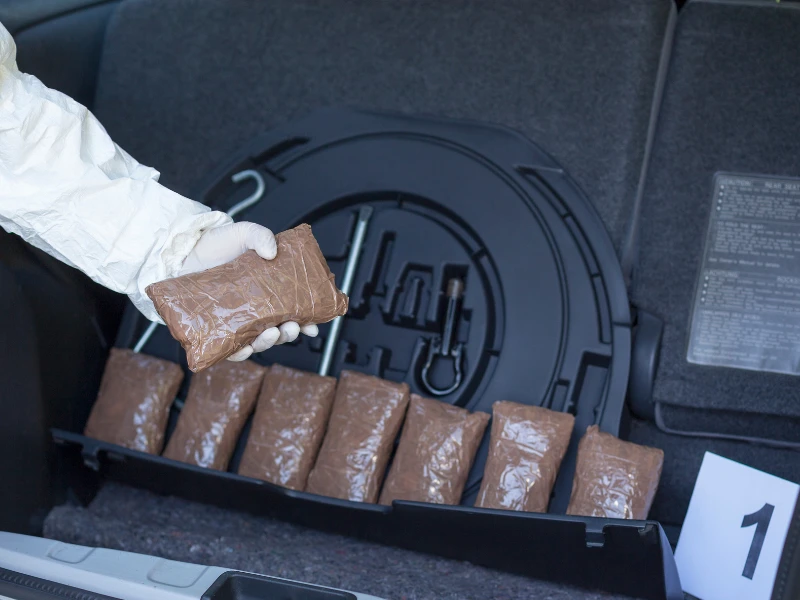
North Carolina Drug Trafficking Laws
Under N.C. General Statute § 90-95(h), drug trafficking charges focus on drug type, weight, and conduct rather than assumptions about intent or distribution networks. Drug trafficking is treated as a serious felony offense with mandatory minimum penalties that apply statewide, including throughout Wake County.
Schedule a Free Consultation
Contact John McWilliam, PLLC, for Drug Trafficking Charges in Wake County
Drugs Commonly Involved in NC Trafficking Cases
The type of controlled substances involved plays a central role in how trafficking charges are classified and punished in Raleigh and the greater Wake County areas.
Marijuana Trafficking
Despite changing public attitudes toward marijuana possession, North Carolina continues to prosecute marijuana trafficking aggressively.
Marijuana trafficking charges apply when a person is alleged to possess more than 10 pounds of marijuana. Once this threshold is met, the offense becomes a felony drug trafficking charge with mandatory minimum prison time and fines. Prosecutors do not need to prove intent to distribute or sell marijuana to pursue trafficking charges.
Cocaine Trafficking
Cocaine trafficking is one of the most frequently charged trafficking offenses in North Carolina.
Drug trafficking charges apply when a person is accused of possessing 28 grams or more of cocaine. These cases carry mandatory minimum prison sentences that increase significantly as the alleged weight increases. Even a relatively small increase above the threshold can elevate the felony classification and sentencing range.
Heroin and Opioid Trafficking
Heroin and other opiates carry some of the harshest trafficking penalties under North Carolina law.
Trafficking charges may apply when a person is accused of possessing as little as 4 grams of heroin or similar opioids. Convictions at this level can result in lengthy mandatory minimum prison sentences and substantial fines. These charges frequently involve laboratory testing, purity analysis, and chain-of-custody issues that can become central to the defense.
Other Common Drug Trafficking Charges
North Carolina drug trafficking laws also apply to a wide range of other controlled substances. This is not a complete list, and charges may apply to additional drugs classified under state law depending on drug type and quantity alleged.
Methamphetamine
Trafficking charges apply when a person is alleged to possess 28 grams or more of methamphetamine. At the lowest tier, a conviction carries a mandatory minimum prison sentence of 70 to 93 months and a $50,000 fine, with penalties increasing significantly as weight increases under North Carolina law.
Prescription Opioids
Drugs like Oxycodone and Hydrocodone are classified as opiates under North Carolina law. Trafficking charges generally apply when possession reaches 28 grams or more, based on total pill weight or aggregate dosage. Convictions carry mandatory minimum prison sentences and fines that escalate by tier, even when there is no evidence of street-level sales.
Fentanyl and Fentanyl Analogs
Fentanyl is treated as an opiate under North Carolina drug trafficking statutes. Trafficking charges may apply at 4 grams or more, the same threshold as heroin. Even at the lowest level, convictions can result in 70 to 93 months in prison and substantial mandatory fines due to the drug’s classification and potency.
MDMA (Ecstasy)
Trafficking charges apply when possession reaches 28 grams or more of MDMA. Mandatory minimum sentences begin at 70 to 93 months in prison, along with significant fines, and increase as the alleged weight rises. Proof of distribution is not required once the statutory threshold is met.
Synthetic Drugs
Synthetic cannabinoids and other designer drugs may trigger trafficking charges once they are classified as controlled substances under North Carolina law. Thresholds and penalties depend on how the substance is scheduled, but convictions carry mandatory minimum prison sentences and felony classifications tied to weight.
Schedule a Free Consultation With a Raleigh Drug Trafficking Attorney
If you are facing charges for drug offenses involving trafficking, do not wait to seek legal help. Speaking with John McWilliam for drug defense trafficking representation promptly allows you to understand your options, assess potential defenses, and begin building an effective defense under North Carolina law. John McWilliam, PLLC represents individuals who are accused simply because law enforcement alleges they possessed more than a certain amount of a controlled substance, not because they were operating a drug enterprise.
Contact John McWilliam, PLLC today to schedule a FREE consultation and confidential case evaluation. Get started today by calling 919-772-4000 or filling out our convenient online contact form.